


When “Cute” Becomes a Boundary: Rabbits, Praise, and the Soft Discipline of Recognition

There are words that appear gentle because they do not arrive with the force of command. They seem to come from affection, familiarity, even admiration. Yet some of these words do important social work precisely because they sound harmless. “Cute” is one of them.
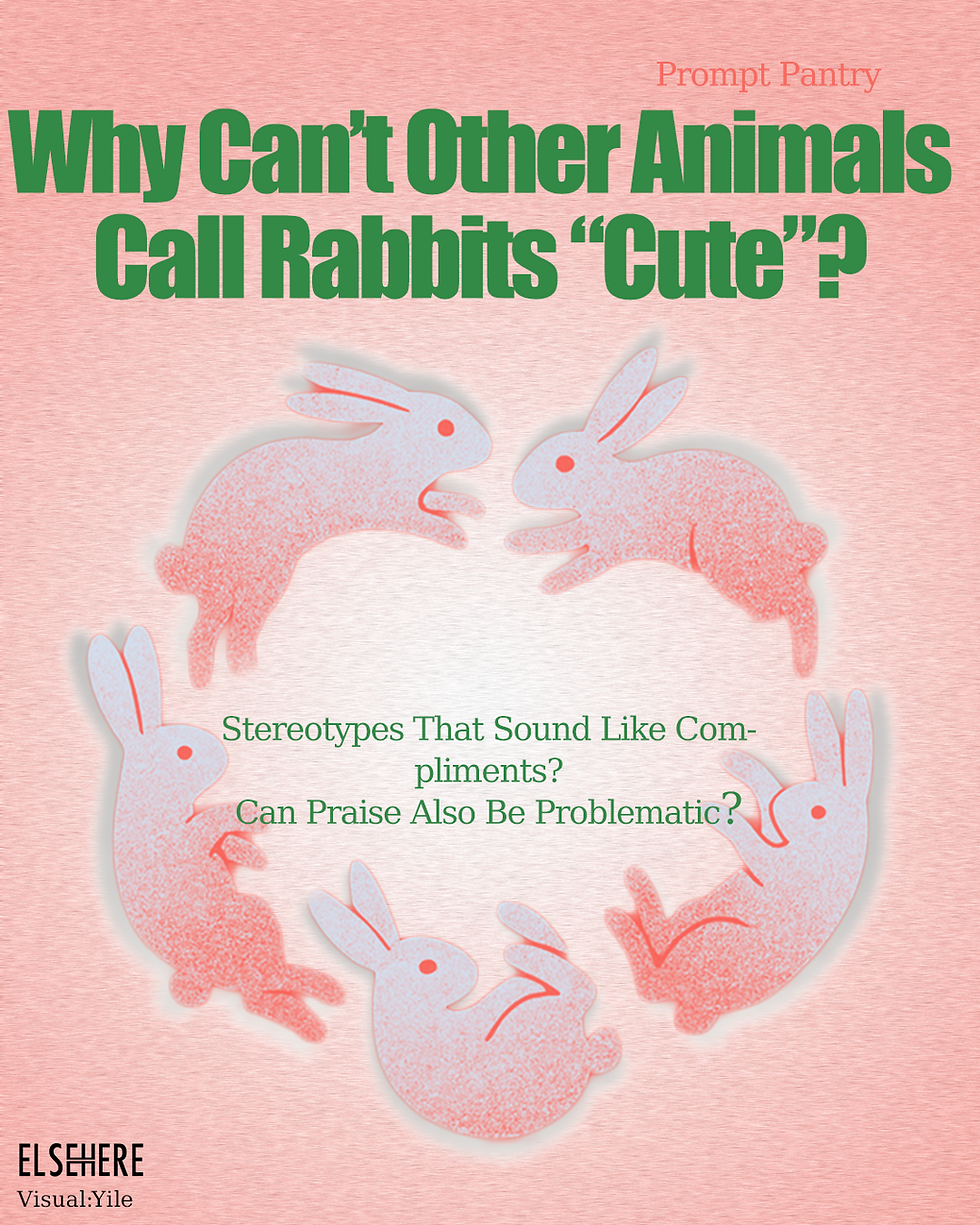
In ordinary use, “cute” appears to be a minor aesthetic judgment. It signals smallness, softness, approachability, and emotional ease. It lowers the stakes of encounter. It invites fondness. For that reason, it often escapes scrutiny. People rarely pause over it, because praise is assumed to be benign. But language does not operate only through explicit hostility. It also organizes social life through terms that seem warm, flattering, and light. A word can affirm and reduce at the same time. It can welcome someone into visibility while deciding, almost imperceptibly, what kind of visibility they will be allowed to have.
This is why the question raised by Zootopia matters. The issue is not whether “cute” is inherently offensive. The issue lies in the historical and relational conditions under which the word is spoken, repeated, and attached to a group. In the film, rabbits do not occupy a neutral position. They belong to a broader herbivore population that is structurally read as vulnerable, gentle, and non-threatening. Judy Hopps enters the story trying to break that frame. She does not simply want recognition. She wants a different kind of social legibility. She wants to be seen as capable, disciplined, ambitious, and authoritative within an institutional order that has already allocated those qualities elsewhere.
That is why the remark “you’re cute” matters more than its surface tone suggests. It does not merely describe Judy. It relocates her. At the very moment she attempts to appear as an agent, she is returned to a familiar cultural slot. Her effort, intelligence, and political desire are compressed into an affective shorthand that is easier to absorb. What looks like praise functions as semantic containment. Complexity is translated into charm. Aspiration is softened into style. Institutional difficulty is displaced by a language of personal appeal.
What is at stake here is not insult in the narrow sense. The deeper issue is discursive positioning. Certain groups are repeatedly addressed through a vocabulary that fixes them within a narrow range of acceptable traits. Over time, those traits cease to function as casual descriptors. They become anticipatory frameworks. They tell others how to perceive the group, and they tell the group how it will most easily be accepted. The word begins to carry an expectation. It proposes a mode of appearance before any individual speaks or acts.
Seen this way, “cute” belongs to a larger economy of soft power. It is part of the cultural machinery through which difference is made manageable. Social order is not sustained only by exclusion, prohibition, or overt domination. It is also sustained by low-intensity classifications that seem friendly enough to pass without resistance. A group is praised for being gentle, charming, emotional, cooperative, delicate, or sweet. Each term may sound positive when heard in isolation. Yet repeated over time, such language narrows the imaginable range of subjecthood. It becomes harder for the person so named to appear as forceful, difficult, intellectually commanding, politically consequential, or structurally threatening. The compliment does not erase difference. It edits difference into a form that power can live with.
This is part of what makes “cuteness” historically significant as a cultural category. Cuteness is never only an aesthetic response to form. It is also a relation of scale and power. The cute object is typically imagined as small, graspable, vulnerable, and emotionally available. It invites care, but often on unequal terms. To call someone cute is to pull them toward that field of reception. They become easier to hold within a framework of harmlessness. Their presence can be enjoyed without requiring a serious redistribution of authority. The category soothes the observer. It reassures the social field that what appears before it will not ask too much, press too hard, or disturb the dominant order.
In Zootopia, this mechanism becomes especially sharp because the film organizes animal difference through a political allegory. Predator and prey are not merely biological categories. They are narrative instruments through which fear, stereotype, historical memory, and social hierarchy are staged. Within that world, Judy’s ambition carries more than personal significance. It unsettles a patterned imagination about who belongs where. Her movement toward the police force is a movement across an already coded boundary. She is not simply entering a profession. She is pressing against the terms under which her kind has been made intelligible.
The phrase “you’re cute” intervenes at exactly this threshold. It does what regulatory language often does best. It absorbs deviation before deviation can fully alter the frame. It recognizes the subject, but only after translating her into a familiar idiom. Judy may have arrived as a disciplined aspirant to institutional power, yet she is received through a vocabulary that returns her to softness. This is how social categories maintain themselves. They do not always reject what exceeds them. Sometimes they rephrase it.
For this reason, the problem with “cute” is not reducible to individual intention. A speaker may mean no harm and still participate in a structure of diminishment. Language exceeds the speaker. Words carry sedimented histories, patterned associations, and social habits of recognition. Their force does not come only from what one person feels while speaking. It comes from repetition across time, from who tends to be named in this way, and from what possibilities are quietly opened or closed when that naming occurs.
This is also why reclaiming or reusing such a word within a group does not settle the question of its broader function. A rabbit calling another rabbit cute does not operate in the same field as a dominant group addressing a structurally diminished one. The difference lies in positionality, historical load, and the asymmetry of who has the power to define whom. The same word can move differently across social relations because language is never detached from structure. Its meaning is produced in use, and use is never innocent of history.
What Zootopia exposes, perhaps more clearly than it intends, is a familiar mechanism of contemporary life. Many forms of containment no longer speak in the language of open exclusion. They arrive as encouragement, branding, intimacy, and positive description. They tell subjects they are lovable, expressive, authentic, adorable, or naturally this or that. Yet beneath the apparent warmth lies a sorting function. These terms help determine who will be taken seriously, who will be indulged, who will be celebrated only within a confined register, and who will be permitted to claim full complexity without first being made legible as safe.
To attend carefully to a word like “cute” is therefore to attend to the politics of minor language. Social order is often reproduced in these small verbal gestures, in terms so common they pass beneath the threshold of critique. A culture reveals itself not only in the names it forbids, but in the names it repeats lovingly. Some words wound by striking. Others wound by smoothing. They reduce friction, lower resistance, and return a person to a place already prepared for them.
What sounds soft can still draw a line. What sounds affectionate can still assign a role. And what appears to be a compliment may, under historical pressure, become one more way a world teaches certain subjects how to remain small enough to be welcomed.


Comments