Do We All Have a "Mommy Complex"?
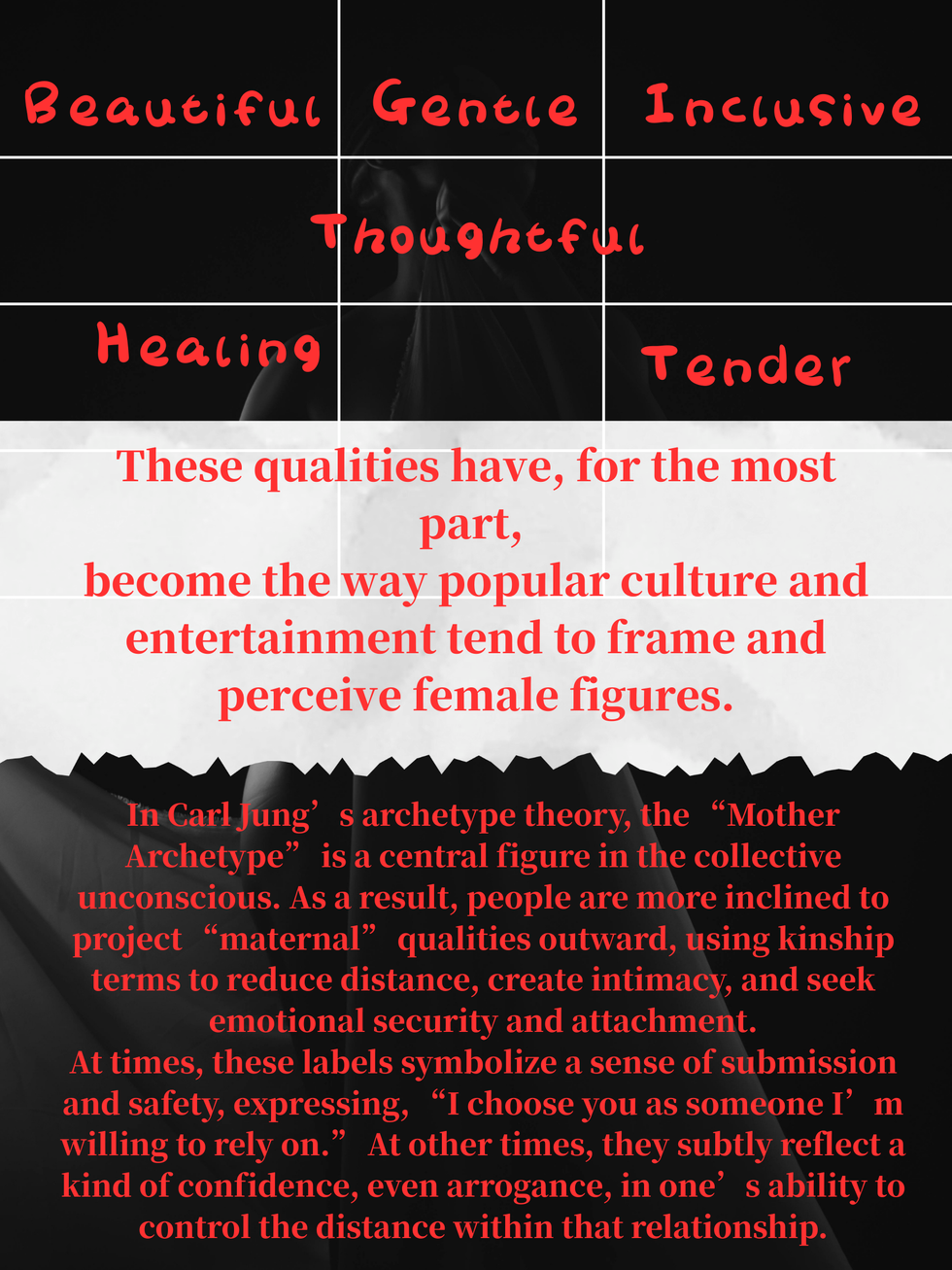
We are obviously not talking about a clinical diagnosis here. What we want to look at instead is why, in today's internet culture, words like "mom," "mommy," have become a kind of intimacy code that almost everyone immediately understands. The term originally points to the most primary relationship of care, yet it keeps getting borrowed, generalized, and projected onto strangers, idols, fictional characters, an even desire itself. As a result, "mommy" no longer refers only to an actual mother. It has become a symbol of safety, inclusion, maturity, reliability, and sometimes even a subtle sense of control.
In this issue, we want to use the figure of “mommy” to unpack a few questions:
🔹 Why do we so easily call someone “mommy”?
🔹 Why has this label spread so quickly through entertainment culture and public imagination?
🔹 Why is the internet’s version of “mommy” sometimes more addictive than real motherhood?
🔹 When everyone is calling the same person “mommy,” what are we actually confirming?
So, do we all have a “mommy complex”? Maybe the real question is not whether we truly desire “the mother,” but why we so urgently need a name for our attachment, admiration, and fantasies of intimacy— a name that can be spoken out loud in public.