


Uncanny Intimacies | Inside Out: A Conversation with Haruka Motohashi

Updated: Sep 12
Welcome to Inside Out, a conversation series grounded in a method of slowness. Today's guest is Haruka Motohashi, a Japanese editor, colorist, and New York Emmy®-nominated and award winning documentary filmmaker who grew up in Tokyo and is currently based out of New York City. Motohashi’s work is informed by her background in visual art and examines the complex relationships between memory, geography, and identity. While her trilogy, consisting of Back Home, Nostalgia for Tokyo, and There Tokyo, explored the emotional terrain of familial separation, Motohashi shifts her focus to the impacts of displacement in her current project, Soilless Gift.
ELSEHERE: Before filmmaking became your primary form of practice, what had painting already taught you about looking, duration, composition, and emotional atmosphere?
Haruka Motohashi: Before filmmaking, painting taught me how to construct a tableau by capturing a frozen moment and transforming a transient scene into a monument. It made me hyper-aware of how space and time are composed within a single frame. Painting is ultimately the practice of translating raw perception into a two-dimensional form, heightening the bodily experience of seeing through one's own eyes. These lessons became deeply foundational to my filmmaking. As a result, my cinematic narratives are driven not only by a sequence of "what happens next", but by the weight, texture, and atmosphere of what is already inside the image.

ELSEHERE: Across directing, shooting, editing, and color grading, you remain unusually close to several stages of image construction. How does that continuity affect the authorship of the film? What becomes possible when the person who lived an experience also controls its rhythm, color, and final visual atmosphere?
Haruka Motohashi: It’s immensely difficult as the maker to view these films with a truly critical eye, especially when a significant portion of your life is unfolding on the screen. At times, I have collaborated with editors who structured the footage beautifully, but almost always refrained from showing the intricate, messy complexities of real-life relationships. Similarly, feedback from external groups often pushed for a traditional narrative arc—complete with clean openings, clear conflicts, and neat resolutions— which fundamentally lacked structural nuance.

When it comes to what I capture, I’ve always maintained a strange, complex relationship with traditional plot structures. Although my previous films are deeply personal accounts, they are never prewritten. Instead, my filmmaking process allows a series of raw encounters and unexpected revelations to shape the story. This is especially true when the camera faces human subjects because it captures far more than mere actions or situations. It reveals subtle, interpersonal dynamics such as the Japanese concept of Ma (the meaningful void or space between things). Reading these silent spaces takes an enormous amount of time before they can be translated into a legible cinematic form. While I may not always be the most detached person to critically construct a film centered around myself, I am uniquely positioned as the one who constantly questions what is occurring deep within the footage. If we define authorship more as a profound sense of responsibility, that weight truly manifests during the later stages of post-production. It arises when you must build a cohesive work out of hours of recordings, closely reading how each person expresses their raw existence and intentions to the camera. Ultimately, it is about navigating the unexpected relational dynamics I find myself in and discovering how deeply vital they are to my own existence.
ELSEHERE: Color grading is often treated as a finishing process. In your practice, it appears closer to interpretation. How can color alter the emotional or ethical meaning of documentary material without falsifying the reality from which it came?
Haruka Motohashi: Color grading is organic throughout my post-production and editing process. I see it as an extension of my relationship with the camera and how it functions as an eye. This approach evolved naturally from shooting in Log or RAW formats, which inherently demand interpretation. Color grading brings out what is natively embedded in the footage, allowing me to read the unique language of data captured in front of a landscape. The camera cannot fully mimic the complex link between human eyes and perception because its view is always limited, biased, and cropped in terms of framing and brightness. Paradoxically, as someone who is nearsighted, I find the camera also brings sharper detail to an image that my eyes might miss. During filming, color grading is the process through which I maximize my original intention: to translate the raw, lived experience of a physical space directly into the image.

ELSEHERE: Your work combines video-diary material with quiet, composed imagery. What tension do you find between the immediacy of the diary and the deliberateness of the tableau? How do you decide when an experience needs to remain raw and when it needs formal distance?
Haruka Motohashi: In my previous films, diary-style footage rarely blended well with composed imagery. The raw immediacy often felt disruptive, breaking the immersive world conjured by the deliberate tableaus. Prior to filmmaking, when I first began making video work at the School of the Art Institute of Chicago, ironically, most of my footage was handheld and highly composed shots that felt out of place. This was partially because handheld camerawork carries a distinct intimacy. It signifies a specific, unrepeatable moment shared between the person behind the lens and the subject being filmed which allows those scenes to stand entirely on their own. Conversely, while composed imagery is visually striking, it can sometimes lack the active, living meaning of observation.

The key to navigating this tension lies in the intentional awareness of viewing, rather than the aesthetic form itself. The transition from a static tableau to raw expression no longer feels like a jarring jump when the audience understands that the director is actively confronting reality. When viewers perceive each shift as a return to self-reflection, it becomes a natural, fluid walkthrough across the same artistic terrain.
ELSEHERE: There is an ethical difficulty in making a film from a family relationship that is still unresolved. How did you distinguish between witnessing, protecting yourself, protecting another person, and turning intimate pain into a public work?
Haruka Motohashi: It is quite a different scenario when a filmmaker films their family or close people in their life as the subject. Thinking back, when my mother agreed to be part of the film, it did not mean she always liked the way she was portrayed; rather, she supported the main goal of building the film. On the other hand, my younger brother, who lived with my mother, refused to provide even a bit of his voice. For many, it was puzzling as to why a mother was willing to help a daughter she was long estranged from without any intention of becoming closer with her again. Her attitude remained the same even over the course of several years and three films about our relationship. She supported her daughter as a filmmaker, which I assume was a reflection and fulfillment of her own sense of responsibility.

Despite the complexity of family ties, those attitudes transformed how she is portrayed into a warm, sympathetic, and likable person and mother. In fact, because this portrayal of my mother became so compelling, the films shifted to center more around her rather than my own singular perspective. Instead, my presence is filtered through my relationship with her, which ultimately added greater depth to putting myself in the film. There were even a few instances where I chose to cut footage to maintain her dignity, despite many people suggesting I reveal those moments.
ELSEHERE: You have described Soilless Gift as a major evolution in your practice. What has changed most fundamentally from Back Home to this new work: the scale of inquiry, the structure of the film, your relation to autobiography, or your understanding of geography itself?
Haruka Motohashi: I’ve always wanted to explore a spectrum of uncanny intimacy through the lens of otherness, moving from familial spaces to our profound interaction with geography. Back Home and the previous installments of my trilogy— Nostalgia for Tokyo and There Tokyo— examine the emotional terrain in family dynamics. In this context, “otherness” is explored directly through mother-daughter dynamics underscoring a theme of personal estrangement. In those works, physical geography serves primarily as a distant backdrop to personal alienation.

Nevertheless, our lives also unfold alongside non-human entities tied to our physical geography which we often project our personal relationships onto. This connection is an "uncanny intimacy" of which we ultimately lack definitive answers for its true reciprocity. I am driven by a desire to explore how culture and our perception of the world are shaped by geography, and in turn, how it forms a larger force in our lives. My perspective undergoes a fundamental shift as the concept of geography expands within Soilless Gift. Through this lens, geography evolves beyond a passive setting or canvas for the self. It becomes the primary framework used to examine our broader society, socio-geographical landscapes, and humanity’s contemporary relationship with the non-human world, in the hope of revealing what dictates our behavior.

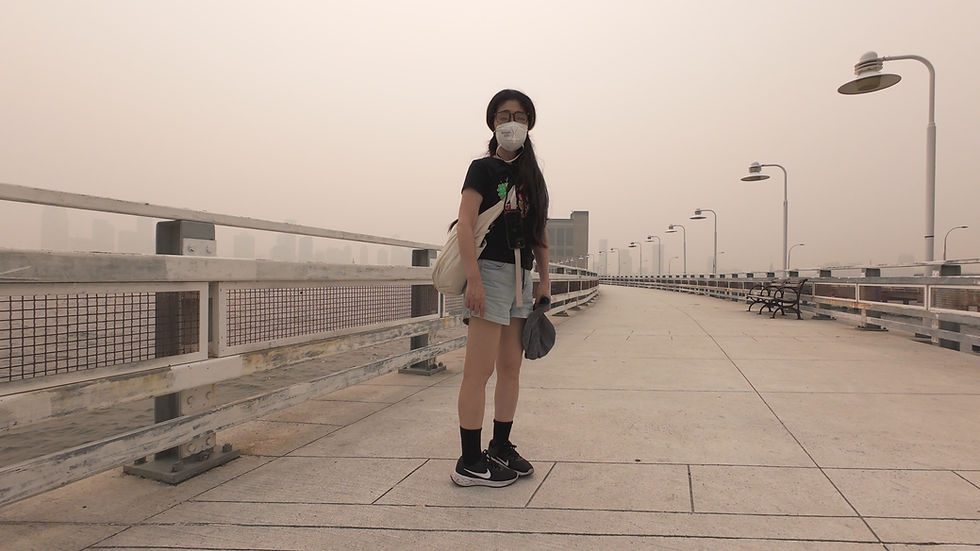
This work approaches migration as a complex spatiotemporal study of human experience and knowledge, drawing parallels between current extreme urban weather events in New York City and the recurring natural disasters shaped by Japan’s unique geography. Soilless Gift is an active observation of geographic features, exploring how human behavior interacts with and alters them, especially in an era of rising sea levels. The film acts as a powerful metaphor for a "soilless" identity, investigating the rootlessness and adaptation that define the contemporary migrant experience within the highly artificial urban landscapes a vast majority of the global population currently inhabits. Society, identity, and collective memories are thus projected through this investigation of physical geography and our lived experience within it.
Haruka Motohashi’s Work


About Haruka Motohashi
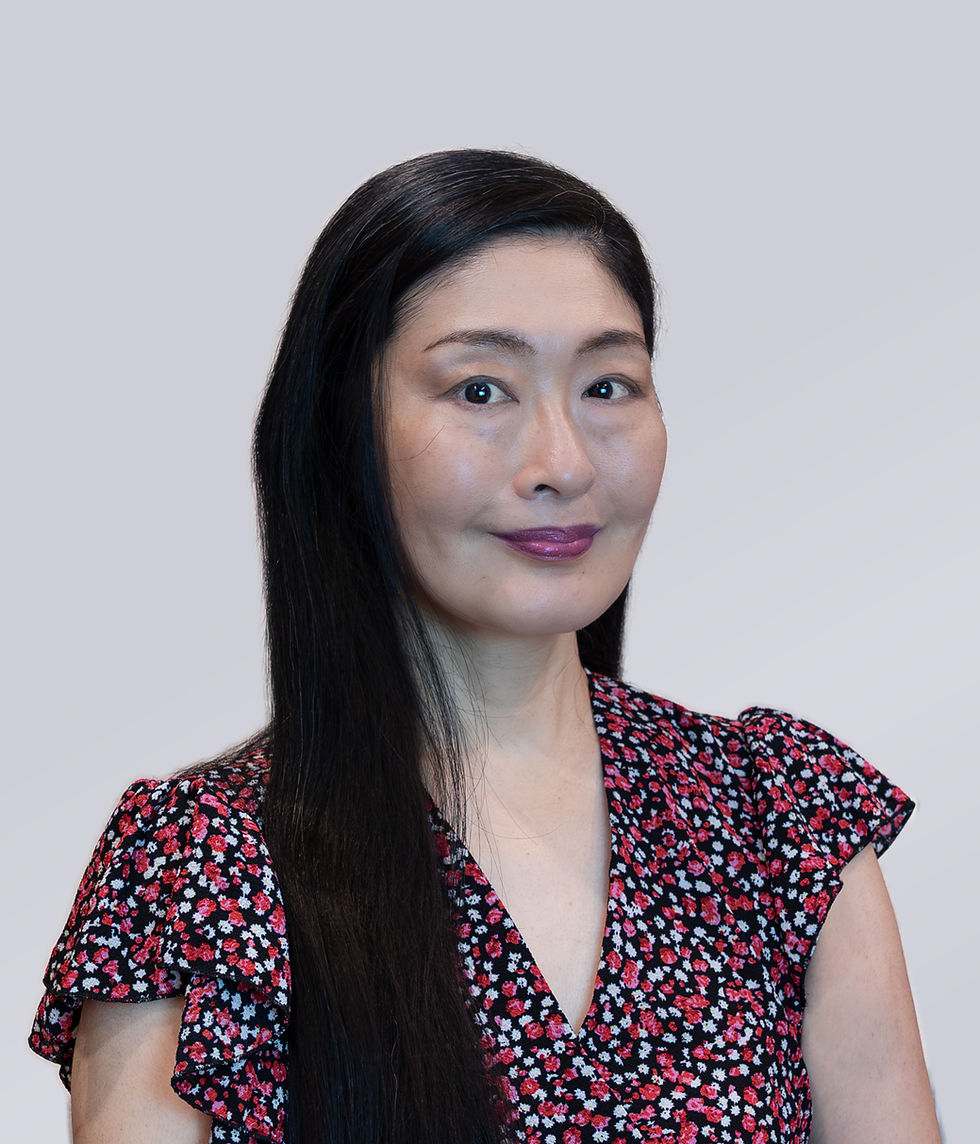
Haruka Motohashi is a NY Emmy®-nominated and award winning documentary filmmaker, also works as a colorist and editor, born and raised in Tokyo currently based in New York City.
Her documentaries have been screened at numerous Film Festivals: her short film “Back Home” was screened at DOC NYC 2019, won the best documentary at Big Muddy Film Festival (IL, USA) 2018, and had been picked up by a French distributor. Additionally it was aired in 2024.
Haruka’s documentaries interweave intimate, personal, and cultural memories with deeply artistic visuals, reflecting on her background in visual art practice. She has enjoyed serving as jury at multiple film festivals since 2022. She holds an MFA in film from City College of New York and a BFA in fine arts from the School of the Art institute of Chicago.
Artist Statement
My filmmaking practice examines how time alters our relationship to geographical space, exploring the collective and personal memories awakened by relocation. Born and raised in Tokyo and now based in New York, my identity has been shaped entirely within major metropolitan environments. These uncanny urban spaces have fundamentally mutated my perception of the world, yet they remain the only landscape I call home. By exploring life-changing disruptions—such as environmental trauma, familial separation, and a persistent longing for belonging—I examine the enduring psychological bind between geographic surroundings and human identity.
To translate these elusive psychological states onto the screen, I employ an essayistic, poetic mode of editing that intentionally challenges the traditional boundaries of non-fiction filmmaking. I do not merely document urban reality; I reconstruct the internal, felt experience of it. My formal methodology relies on painterly imagery, non-linear timelines, and the highly selective use of archival footage to alter time and space. By interweaving historic clips of classic Japanese cinema with still photography of modern New York City, the editing room becomes a site of intense psychological excavation. I contrast these distinct visual textures to build a liminal, third space on the screen, where cultural displacement, cinematic history, and personal geography can be visually and structurally confronted.
Moving from a past trilogy that closely examined the emotional terrain of familial separation—consisting of the films Back Home, Nostalgia for Tokyo, and There Tokyo—my current artistic practice shifts toward broader socio-geographical themes. My new film in production, Soilless Gift, expands this focus on psychogeography by exploring travel as a complex migration experience across time and space, alongside extreme urban weather events in New York City. The film treats shifting climates and rigid architecture as both an emotional canvas and a physical barrier, directly paralleling Japan’s recurring natural disasters. Ultimately, Soilless Gift acts as a powerful metaphor for a "soilless" identity, investigating the rootlessness and adaptation that define the contemporary migrant experience while exposing our shared modern inheritance: a highly artificial urban environment where the vast majority of the global population now resides.
About Inside Out
Inside Out is ELSEHERE’s long-form conversation series, published through STRATUM. It begins from the belief that before artists are understood through category, institution, or medium, they must also be encountered through the deeper structures that shape a practice over time: memory, method, contradiction, relation, and the conditions of life pressing from within the work. This conversation with Haruka Motohashi has been transcribed and edited from a live recording for publication.
Edited by Lilliana Miller, Yuyang Hu


Comments